
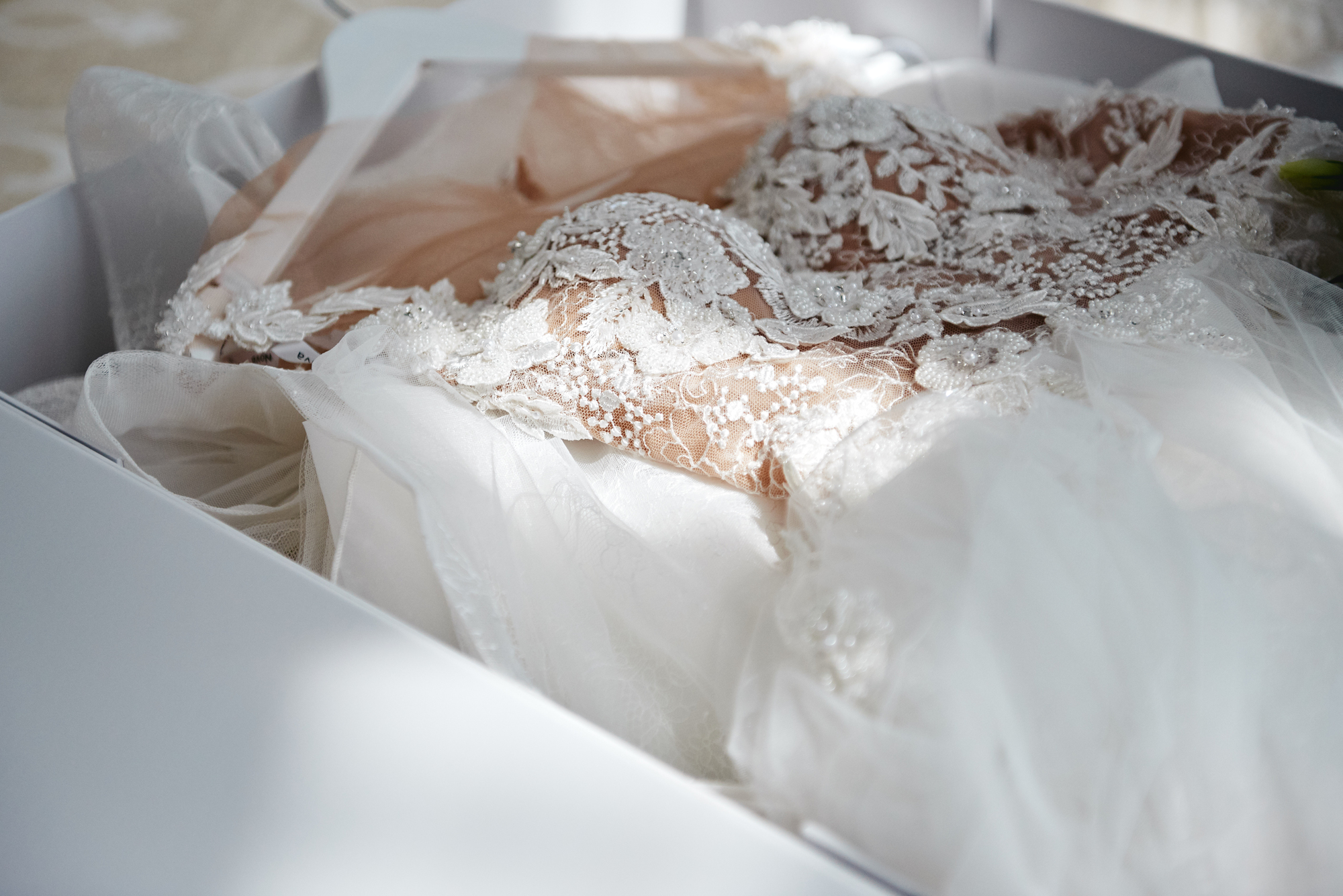
Your wedding dress: one of the most precious garments you’ll ever wear. After the big day, you’ll likely want to preserve it, protect it, and maybe pass it on someday. But, how you handle it in the months and years ahead truly matters. Let’s walk through what brides need to know about cleaning and storing their dress—so you can relax and know it’s in good hands.
1. Clean before you store
Right after your wedding, you might be tempted to stash the dress away and call it a day. Don’t. Stains, even unseen ones, can set permanently if left untreated. Whether it’s a wine spill, grass mark, or just body oils and sweat, anything left on fabric will age faster and possibly damage the dress over time.
Choose a trusted specialist who knows bridal gowns—many cleaning companies offer “wedding dress cleaning” as a dedicated service. After cleaning, make sure any repairs (loose beads, seams) are done before storage.
2. Pick the right storage materials
Once your dress is cleaned and completely dry, you’ll want to store it in a safe environment. A couple of key things to remember:
- Use acid‑free tissue paper or cotton muslin to pad and wrap the dress. Avoid plastic bags or standard cardboard boxes—they trap moisture and off‑gassing.
- Use a quality archival box made for wedding gowns, if possible.
- Store the dress flat, or if it must hang, use a padded hanger and cover it with a breathable cotton garment bag (not plastic). Hanging long‑term can deform heavy dresses or straps.
3. Choose the right environment
Temperature, humidity, and light matter. You’re aiming for a cool, dry place away from sunlight and extreme temperature swings. Avoid attics, basements, or rooms that get very warm or humid. Light can yellow fabrics over time; humidity can cause mildew.
Periodically (once a year or so), check on the dress. Look for discoloration, moisture, or insect activity. It’s better to spot an issue early than discover a serious problem years later.
4. What about pressing and occasional checks?
Before you box it up, you might want to press or steam the dress—preferably with a professional who knows wedding fabrics like satin, tulle, chiffon, lace. They’ll know the right settings and how to avoid damage. Once in storage, avoid folding the dress the same way every time—if you must move it, re‑fold in a different pattern so the creases don’t become permanent.
Because you cleaned it first, it’s also a good idea to lightly re‑inspect before storage: touch up any remaining creases, and make sure straps or embellishments are secure.
5. Long‑term considerations and peace of mind
If you ever plan to pass the dress down, convert it (e.g., into a christening gown), or even sell it, proper storage pays off. Write down the cleaning date, the name of the cleaner, and take photos of the dress before storage. This becomes part of the dress’s provenance.
And remember even well‑stored dresses may need attention several years down the line—so keep an eye on it.
Meet a trusted local partner
If all of this sounds like too much to handle on your own, or you simply want peace of mind, the team at Hatcher’s Dry Cleaners in downtown Sevierville is a terrific resource. They’ve been serving Sevier County since 1946 and offer specialized wedding and formal wear cleaning services.
Whether you’d like expert cleaning, proper packaging, or even advice on how to store your wedding dress for the long haul, they’ll guide you. Give them a call, drop in, or ask about their archival storage options—they’ll help you treat your gown with the care it truly deserves.
Your wedding dress is a memory maker. With the right cleaning and storage approach, you’ll be preserving more than fabric—you’re preserving a moment. Follow these steps on how to store your wedding dress, and you’ll rest easy knowing your gown is safe, sound, and ready for whatever future you imagine. Congratulations again—and happy storing!
Comments are closed